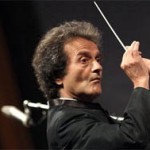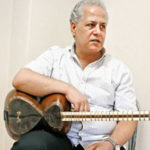
Hossein Alizadeh

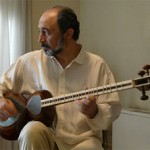
Hossein Alizadeh is an Iranian composer, radif-preserver, researcher, teacher, and tar and setar instrumentalist and improviser. He has made numerous recording with prominent musicians including Shajarian, Nazeri, Khaladj, and Gasparyan, and is a member of the Musical group, Masters of Persian Music.

Alizadeh was born in 1951 in Tehran. He graduated from the music conservatory in 1975 and entered the school of fine arts in the University of Tehran where he studied composition and Persian music. He continued his education at the Berlin University of the Arts in composition and musicology. He has also studied with various masters of traditional Persian music such as Houshang Zarif, Ali Akbar Shahnazi, Nur-Ali Borumand, Mahmoud Karimi, Abdollah Davami, Yusef Forutan, and Sa’id Hormozi. From these masters he learned the radif of Persian classical music.

He plays the tar and setar, and has recently derived the sallaneh and shurangiz from the ancient Persian lute barbat. He was nominated for the 2007 Grammy Award along with Armenian musician, Djivan Gasparyan, for their collaboration album, The Endless Vision. In 2008, he was voted as “Iran’s most distinguished musician of the year”.
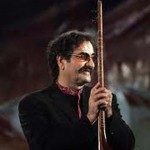

Shahram Nazeri

Shahram Nazeri (1951) is a contemporary Kurdish tenor who sings classical Iranian music from Kermanshah. He has been accompanied by some of the authorities of Iranian traditional music such as Jalil Shahnaz, Alizadeh, Jalal Zolfonoun and Payvar. He was the first vocalist to set Rumi’s poetry to Iranian music thirty-five years ago, thus establishing a tradition of Sufi music within both Iranian classical music. Nazeri has released over forty recordings to date. His Gol-e Sadbarg (The One-hundred-petalled Rose) is among the best-selling albums of Persian classical music and Sufi music.

His Throughout his childhood, he was under the tutelage of various Persian musicians, including Abdollah Davami, Nourali Boroumand, and Mahmood Karimi. He specializes in the tradition of Sufi music, which turns to song the mystical poetry of Rumi, Hafez, Attar, and others. Nazeri is known particularly for several decades of works on Rumi poetry. He is also working on the composition and arrangement of a symphony on Firdowsi’s Shahnameh.

Reza Vali

Reza Vali (1952) is an Iranian musician and composer. He studied at the Tehran Conservatory. In 1972, he attended the University of Music and Performing Arts, Vienna, where he studied composition. He later attended the University of Pittsburgh where he received his PhD in composition and theory. He is currently on faculty at Carnegie Mellon University.

Vali’s orchestral works have been performed in the United States by the Pittsburgh Symphony, the Seattle Symphony, the Boston Modern Orchestra Project, the Baltimore Symphony, the Memphis Symphony Orchestra, and Orchestra 2001. His chamber music has been performed by groups such as the Cuarteto Latinoamericano, the Pittsburgh New Music Ensemble, Kronos Quartet, the Seattle Chamber Players, and the Da Capo Chamber Players.

Ghashang Kamkar

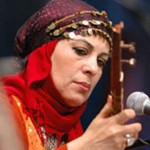
Ghashang Kamkar (1953) is an Iranian Kurdish musician. She is the only female member of the musical group Kamkarha, composed of her seven brothers and her. She learned to play the Setar from her father, Hassan Kamkar, and later from musical masters such as Saeed Hormozi, Ahmad Ebadi, Mohammad Reza Lotfi and Hossein Alizadeh. She also plays the violin. She now teaches Setar.

The Kamkars group is one of the leading musical ensembles in Iran today. Their repertoire ranges from the vast array of Kurdish music with its poignant, entrancing melodies and uplifting high energy rhythms to the traditional classical music of Iran.

Dariush Talai

Dariush Talai (1953) plays both the Tar and Setar. He studied Persian music with masters of the Radif. His teachers include Ali Akbar Shahnazi and Nur Ali Borumand with whom he studied radif and old compositions, as well as youssef Forutan and Abdollah Davami, with whom he studied Setar and vocal techniques and repertories.

Master Talai has taught at the University of Tehran, University of Sorbonne-Paris, University of Washington-Seatlle and was awarded a number of major prizes for his contribution to Persian Art Music. He has collaborated with artists such as Maurice Béjart, Carolyn Carlson and Michel Portal

Mohammad Shams

Mohammad Shams (1954) is a composer and conductor. Born in a family of musicians, he has composed more than 650 pieces of traditional, classical and modern music. Despite the troubles an artist in exile must face, Shams found ways to introduce Classical Persian music in international events such as the London Festival in England.

He describes his music as being attached to poetry and to the roots of Persian music. His style is described ample and accurate, paying attention to tones and sounds, to contrasts and to orchestral material full of expression. Shams has said about Persian music: “To me, music has to bring love, harmony, pleasure, happiness, but also rhythm and movement. Our music is so-called sad. It is not. When talking about classical music, I mean it has to keep its nature, but also evolve with time”.

Andre Arezoomanaian

Andre Arezoomanaian (1954-2011) was an Iranian-Armenian pianist and composer. He has written musical scores for a number of films and has performed with Fariborz Lachini and Majid Entezami.

“Golden Autumn” (composed by Lachini) is a good example of his playing skills. Another album of his published posthumously was “The Last Song of Love”.

Shahrdad Rohani

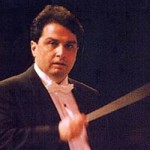
Shahrdad Rohani (1956) is a composer, violinist/pianist, and conductor. He studied at the Academy and Conservatories of Music in Vienna and has received several important scholarships and awards both in Europe and United States.

Mr. Rohani is the music director and conductor of the COTA symphony orchestra in Los Angeles. He has appeared as a guest conductor with a number of orchestras including London’s Royal Philharmonic Orchestra, Minnesota Orchestra, Colorado Symphony Orchestra, San Diego Symphony, Indianapolis Symphony Orchestra, New Jersey Symphony, Zagreb Philharmonic Orchestra, the American Youth Philharmonic Orchestras and many others.

In December 1998 Mr. Rohani was commissioned by the government of Thailand and the committee of the 13th Asian Games to compose and conduct the music for opening ceremonies. The composition became the most popular song of the Asian Games. Mr. Rohani has also recorded several classical CDs with the Slovak Radio Symphony orchestra for Discover/Koch International including the Tchaikovsky Ballet music.

Dariush Pirniakan

Dariush Pirniakan (1955) is an Iranian musician, tar and setar player, and music researcher. He studied tar under the supervision of Mohammad Hasan Ozari, maestro Ali-Akbar Shahnazi, Dr. Dariush Safvat, Yousef Foroutan, Saeed Hormozi, and Mahmoud Karimi. While being a student of late maestro Ali Akbar khan Shahnazi, he studied the radif of Mirza Hossein-gholi and Shahnazi’s advanced level repertoire.

After graduating from the Faculty of Fine Arts in Tehran University, he started to work and teach at the Centre for Preservation and Propagation of Persian Classical Music. He has had long term collaboration with maestro Mohammad Reza Shajarian since 1979. This collaboration lead to more than 220 concerts in Iran, USA, Canada, Great Britain, France, Germany, Switzerland, Sweden, Norway, Denmark, Netherlands, Italy, and UAE. He also had been one of the members of Aref Ensemble, directed by late maestro Parviz Meshkatian. He has been a music professor at Tehran University, the deputy chairman of Faculty of Dramatic Arts in Tehran University, as well as spokesman of Iran Music House. As the founder of Shahnazi Ensemble, he has also had several collaborations with Hamid Reza Nourbakhsh as singer.

Behzad Ranjbaran

Behzad Ranjbaran (1955) is a Persian composer. Ranjbaran was born and raised in Iran. He entered the Tehran Conservatory at the age of 9. Ranjbaran continued his study of composition at Indiana University. He obtained a DMA from the Juilliard School.

Ranjbaran’s music is strongly rooted in the Neo-Romantic movement of the late 20th Century, as well as showing the influence of Iranian and other non-Western music. He has written compositions for, among others, Joshua Bell, Renée Fleming, and Yo-Yo Ma, as well a piano concerto for Jean-Yves Thibaudet. Many of his works are inspired by Persian culture and literature. Persian Trilogy, a large orchestral cycle completed in 2000, was inspired by the Shahnameh of Ferdowsi. He has been on the faculty of the Juilliard School since 1991.

Parviz Meshkatian

Parviz Meshkatian (1955-2009) was a composer, santur player and university lecturer. He studied music theory in Tehran University where he  was introduced to radif by the masters Nour Ali Boroumand, Dariush Safvat, Mohammad Taghi Massoudieh, and Mehdi Barkeshli. He focused on the radif of Mirza Abdollah for santur and setar.

Meshkatian was one of the founding members of the Aref Ensemble (1977) and the Sheyda ensemble. He was also one of the founding members of the Chavosh Artistic and Cultural Foundation. The Chavosh foundation has played a major role in the development of Iranian music for a few decades.

Meshkatian toured Europe and Asia and regularly performed in countries such as France, Germany, England, Sweden, Netherlands, and Denmark. Meshkatian’s collaboration with Mohammad Reza Shajarian produced some of the most memorable recordings of contemporary Persian traditional music. While continuing his work as a composer and a researcher, Meshkatian was also teaching music at Tehran University.

Hengameh Akhavan

Hengameh Akhavan (1955) is a vocalist. She studied classical singing first with her father and later with Adib Khansari.

She started singing for Radio in 1975 collaborating with the Shayda, Aref and Samai Ensembles, recreating the works of Ghamar. In 1984 she was invited to collaborate with the Archive of Iranian national Radio and TV. She has performed many concerts in Iran and Europe.

Alireza Eftekhari

Alireza Eftekhari (1956) is a vocalist of Iranian classical and popular music. He learnt music from several well-known Iranian musicians, such as Taj Esfahani and Ali Tajvidi.

Eftekhari is a popular and prolific Persian singer. He put significant effort in changing the situation of popular music in Iran. In his own words: “In order to introduce pop music to Iranian music culture, I have made myself a scapegoat.”

Iraj Rahmanpour

Iraj Rahmanpour (1956‎) is an Iranian poet, singer, songwriter, and writer. He developed in the field of music and played a pivotal role among neo-folkloric artists, movement which led to a revolution in the popular, folk music of his local culture (Lorestan and Bakhtiary).

His activities began from 1977. He has performed in numerous concerts in Iran, Sweden, Norway, UAE, Portugal and Iraq. He is very popular in the Bakhtiari, Lorestan, Ilam and Kurdistan regions. His goal is the development of his native culture. His style in singing is unique. He researches about the lost and obsolete songs and the forgotten ancient languages of Iran and revives them with his songs.

Maryam Akhondy

Maryam Akhondy (1957) is a classical trained singer from Tehran. She was a student Esmail Mehrtash and Nassrollah Nassehpour, two masters of classical Iranian music. She moved to Europe and, since 1986, has lived in Cologne, Germany. After 1986, Maryam Akhondy started working with other Iranian musicians in exile. With Nawa and Tschakawak, two groups of traditional Iranian musicians, she performed in Germany and Scandinavia.

At the same time she founded Ensemble Barbad, which has been touring all over Europe for the past years. Maryam Akhondy and Ensemble Barbad’s newest project is called Sarmast (intoxicated) based on her own compositions in the style of classical Persian art and music.

Between 1999 and 2000, Maryam Akhondy created an all-female acapella group, Banu. Over the years, she has been collecting songs and has published some of them them in 2004 on her album Banu – Songs of Persian Women.

Majid Derakhshani

Majid Derakhshani (born in 1957) is an acclaimed tar player. He studied string instruments and composition at the University of Tehran, twhere Mohammad Reza Lotfi became his teacher. Subsequent to his emigration to Germany he founded the Nawa Musikzentrum in Cologne; an active centre for Persian classical music outside of Iran.

He has composed for many musicians, such as Mohammad Reza Shajarian (Album Dar Khial). Majid’s declared ambition is to familiarize western culture with Iranian classical music. He has developed a musical style that spices oriental music with European elements. Majid Derakhshani’s cd’s: -sobhe omid -shahre ashenai -lahzeye nab -fasleh baraan -ensemble Didar -Chavoshi -Dar Khial -rendaneh mast. With Mohammad reza Shajarian -morghe khoshsokhan and Boudan o soroudan -toranjestan.

Nader Mashayekhi

Nader Mashayekhi (1958) is a Persian composer and conductor. He studied at University of Music in Vienna and his teacher was Roman Haubenstock-Ramati. During the 1990s he was music director of an Austrian new music ensemble named “Wien 2001”.

He was also the conductor of Tehran Symphony Orchestra (2006-07). His compositions have been performed by Radio Symphony Orchestra, Vienna, Ensemble Zwischen Töne, Berlin, Klangforum Wien, Ensemble Work in Progress, Berlin, Savarian Symphony Orchestra and Tehran Symphony Orchestra.

Hamid Motebassem

Hamid Motebassem (1958) is a classical Persian musician and tar and setar player. His first teacher was his father. Later he started to study with musicians like Mohammad Reza Lotfi, Hossein Alizadeh and Hushang Zarif. In 1991 Motebassem founded Dastan ensemble.  His works include:

– Simorq (based on Ferdowsi’s Shahnameh) for voice, choire and orchestre of Persian instruments

– Zemzeme-haa [Whispers], for voice and Persian instruments

– Darya, for traditional Persian instruments.

Mario Taghadossi

Mario Taghadossi (1958) is an opera singer. He studied violin and singing in his hometown  Tehran and completed his singing education in LA. He then attended the famous  Juilliard School, where he took part in the “Master Classes”, with “Sherill Milnes”, “Renate Tebaldi” and “Luciano Pavarotti”. At the age of 21, Taghadossi won the first  prize in the “Artist of the Future” voice contest.

Among his foreign performances, his tour of Leningrad and Japan rate as one of his best performances. Mario Taghadossi has a large opera repertoire exceeding 36 parts. Recently  he performed the major part of Pinuccio in a musical that was composed and led by  Mr. Rahbari, another Iranian artist.

At the moment he is working on some Persian classical and folkloric songs. He has already  produced a CD with some selected pieces from his present work. He also recorded the opera “La Fanciulla Del West” with the “Hessischen  Rundfunk Orchestra in Frankfurt” with “Gwenth Jones” and “Marcello Viotti”.

Kayvan Mirhadi

Kayvan Mirhadi (1960) is an Iranian composer, conductor, and guitarist. In the course of his career Mirhadi has conducted many choirs and chamber orchestras dedicated to classical music. He esablished a choir and chamber orchestra called Camerata and has begun to perform contemporary classical music in Iran. He has also arranged some tracks of Rock-band celebrities for his orchestra such as Nirvana, Pink Floyd, Scorpions, Iron Maiden and has begun to give live concerts.

He has taught choir, Guitar, Theory of western music and History at the University of Tehran, Azad University, Tehran conservatory and the old and prestigious Tehran college of music (Honarestan).

Parviz Rahman Panah

Parviz Rahman Panah (1961) is a tar player. He entered the Conservatory of Music in Tehran when he was 9. He has introduced a unique style of playing the tar by blending the traditional Persian solos with Western arrangements.

Saeed Farajpouri

Saeed Farajpouri (1961) is an Iranian kamancheh player of Kurdish descent. He is also a prolific Persian music composer and a lecturer at School of Music, Tehran University. He studied under the supervision of Mohammad Reza Lotfi, Hossein Alizadeh and Hassan Kamkar.

He has been a member of the Dastan ensemble since 2000, and toured with Mohammad-Reza Shajarian in 2008 as part of the Ava ensemble.