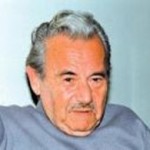
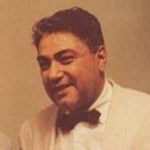
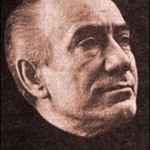
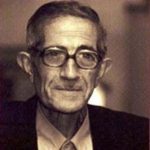
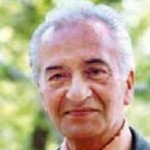
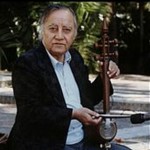
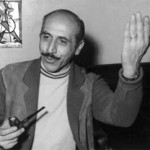
Abdolvahab Shahidi

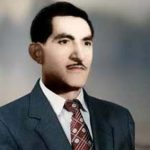
Abdolvahab Shahidi was an Iranian oud player and singer (1922 – ). His teacher was Esamiil Mehrtash. He collaborated with “golha” programme on the Radio for many years. He has worked with many musical masters such as Jalil Shahnaz, Faramarz Payevar, Asghar Bahari, Hossein Tehrani and Rahmatollah Badiyii.

Emanuel Melik-Aslanian

Emanuel Melik-Aslanian ( 1915 – 2003), was a pianist and composer. He studied in Hamburg and graduated from the Berlin Music Academy. On his return to Iran he taught music at Tehran University and Tehran Conservatory of Music. His works have been played by Tehran Symphony Orchestra on numerous occasions.

His first works were composed for piano where he tries to fuse traditional Iranian music with Western standards. These early works quickly established him as thinker and a theoretician in his field. His most well known work was the ballet, “myth of creation” (afsaneh afarinesh) was based on Mithraism.

Rouben Gregorian

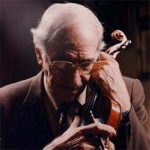
Rouben (Rubik) Gregorian (1915 – 1991) was a violin player, classical composer and teacher of music. He studied at Tehran Conservatory which he directed later. He was also a leader of Tehran Philharmonic Orchestra for a period.

He was one of the first Iranian musicians who collected Iranian folk songs and composed classical pieces based on them. He settled in Boston in 1952. For more than 25 years, he was affiliated with the Boston Conservatory, where he taught violin and was the conductor of the orchestra and chorus.

Heshmat Sanjari

Heshmat Sanjari (1918 – 1995) was a well-known conductor and composer, the son of Hossein Sanjari who was a well-known tar player. Heshmat Sanjari studied violin at Tehran Conservatory of Music under Serge Khotsief and Conducted at the Vienna Music Academy as a pupil of Hans Swarowsky. He also studied Persian Classical music under Ali-Naqi Vaziri.

Sanjari was the conductor of Tehran Conservatory Students Orchestra and the director of the Conservatory in 1951. From 1960 until 1971 he was the permanent conductor of the Tehran Symphony Orchestra, the longest in the history of orchestra. Many notable musicians like Yehudi Menuhin and Isaac Stern played with the orchestra, with him as the conductor.

He composed the works Persian Pictures (in 5 movements) and Niayesh (Praise). The former is regarded by some as a masterpiece of contemporary Persian symphonic music.

Qolamhossein Bigjekhani

Qolamhossein Bigjekhani (1918 –1987) was an Iranian musician and tar player. He was born in Tabriz. He learned tar from his father, Hossein Qoli Bigjeh-Khani.

He had left a number of recordings mostly in Persian Dastgah music. He collaborated mainly with his old friend and Dayereh player M. Farnam. He has also accompanied Mohammad-Reza Shajarian.


Ali Tajvidi

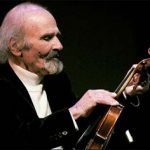
Ali Tajvidi (1919 – 2006) was an Iranian musician, composer, violinist, songwriter, and music professor at the School of National Music and Tehran University. He composed more than 150 songs and has produced for many Persian performers such as Delkash and Hayedeh.

In his youth he took violin lessons for two years under Hossein Yahaghi (uncle of Parviz Yahaghi) and for many years was under the tutelage of Abol-Hassan Saba. He also took Harmony lessons under Houshang Ostovar.

After 1941, Tajvidi performed regularly as a violin soloist in Radio Iran programs. In later years, he conducted two orchestras, for which he wrote numerous compositions. Asheqi Sheyda, Be Yad-e Saba, Atash-e Karevan, Didi ke Rosva Shod Delam, and Sang-e Khara are among his best known works. He also wrote a three-volume book, entitled “Persian Music”.

During his career Tajvidi cooperated with outstanding contemporary artists including Delkash, Gholamhossein Banan, Hossein Qavami, Mahmoud Mahmoudi-Khansari, Akbar Golpaygani, Hossein Khajeh Amiri (a.k.a. Iraj), Jalil Shahnaz, Farhang Sharif, Habibollah Badiei, Parviz Yahaghi, Javad Maroufi, Faramarz Payvar, Mehdi Khaledi, Homayoun Khorram. He is regarded as one of the best violinists in Iran, on a par with Parviz Yahaghi. He also played the sitar.
Haj Ghorban Soleimani

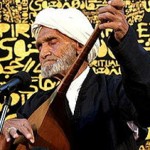
Haj Ghorban Soleimani (1920 – 2008) was a celebrated dotar player and vocalist. Dotar or is a form of Central Asian lute. He was also the pioneer of a new model of the ancient stringed Azeri instrument the gopuz. Soleimani was born in northeastern Iran. His father, Karbalaii Ramezan, an accomplished musician taught him the dotar from a young age. Following his father’s death he continued learning the dotar and sought singing lessons from singers such as Avaz Bakhshi, Gholamhossein Bakhshi Jafarabadi and Mohammad Qeitaqi. By his early twenties he had mastered the traditional Iranian instrument, the dotar, and at the age of 21 he received the coveted ‘Bakhshi’ title, given to people of musical excellence in Khorasan province.

Throughout his career he participated in many international concerts and venues, but was more popular in France than anywhere else where he believed his music was more appreciated. He also performed notably at the Festival of Iranian Arts in Düsseldorf, Germany.

Mahmoud Zoufonoun

Mahmoud Zoufonoun (1920-2013) was an accomplished musician and Tar player. Zoufonoun’s interest in music began after he listened to his father (Habib Zoufonoun) playing and teaching the tar.  Habib began teaching his son the instrument at the age of 8. Aged twelve, already having become a local teacher for tar, Zoufonoun became interested in the violin.

In the 1930s Zoufonoun moved to Shiraz where he learned musical notes and took lessons in the violin. In 1936 (aged 16) Zoufonoun, at the prompting of his first violin teacher Mr. Vaziritabar, moved to Tehran where he took lessons from Rouben Gregorian. In the early 1940s Zoufonoun began playing solo’s on Radio Iran. In 1942 he helped form Anjomane Mooseeghee Melli where he met Rouhollah Khaleghi (who conducted the orchestra).

Zoufonoun worked as a soloist, composer, arranger and conductor at the National Radio and Television. He was a member of the “Golha orchestra”. Over the course of his career he has made efforts to compile, transcribe a compilation of regional folk songs, modes, and styles to date. The work is currently uncompleted. Following his retirement in 1976 from the National Radio and Television, Mahmoud and his family emigrated to the USA. He has continued to teach and compose and perform traditional Persian music, usually with his sons as the Zoufonoun Ensemble.

Hassan Zirak

Hassan Zirak (1921–1972) was a celebrated Kurdish singer from Bukan, known for his recordings of classical Kurdish folk songs. He was famous for his erotic and sensual lyrics, and it’s believed that he composed over thousand songs in his lifetime.

In 1953, he left Iran for Iraq and recorded a great number of songs in Kurdish for the Kurdish section of the Baghdad broadcasting station. After 1958, Zirak immigrated to Tehran where he was employed by Tehran Radio Station. After spending few years in Tehran and recording some of his memorable hits, Zirak went back to Kurdistan he worked with the Kurdish Fine Art Groups. He ended up in Seqiz  where he lived up to his death.

Jalil Shahnaz

Jalil Shahnaz was born in 1921 in Isfahan. Shahnaz studied under the supervision of Abdolhossein Shahnazi and Hossein Shahnaz and befriended ney player Hassan Kassai.

Shahnaz started his acivities in 1949 at Radio Isfahan and in 1957 he was invited to cooperate with Radio Tehran. In the capital he worked as a soloist at Golha program and also later he was quite active at Persian music programs of Shiraz Arts Festival. Shahnaz in the late 1980s became a member of “Persian Music Maestros Ensemble”. The ensemble performed various concerts inside and outside of Persia.”

Persian classical vocalist Shajarian named his most recent musical group “Shahnaz” in honor of Masetro Shahnaz. Jalil Shahnaz died in Tehran on 17 June 2013.

Hasan Gol Naraghi

Hasan Golnaraghi (1921-1993) was not a singer by profession but became a celebrity with the song “kiss me” (mara be boos). Only 2 songs remain from him. This song became very famous because of its coincidence with the 1953 coup. It was rumoured at the time that it was written by an army officer about to be executed. Gonaraghi few years later dismissed this story and revealed that it was in fact written by Heydar Reghabi who was a lecturer in Iranian literature at Tehran University.

This song was first performed by a well known singer Parvaneh but not very successfully. In fact it was Reghabi himself, a friend of Golnaraghi, who encouraged him to sing it knowing his unique voice. The music for it was written by Majid Vafadar and was performed by Yahaghi.


Morteza Varzi

Mortezâ Varzi (1922 –2004) was a kamanche player. He started his music lessons on the violin at age 15 with Morteza Neydavoud, one of the greatest Persian instrumentalists of the twentieth century. After his father advised him to play music on a traditional Persian instrument, he began studying setar with master Nasratollah Zarrin Panjeh, and kamancheh with master Ali-Asghar Bahari.

In 1970, Mr. Varzi took up residence in the United States, promoting Persian music and culture, and instructing both Iranians and Americans in the Persian classical musical repertoire.

Monir Vakili

Monir Vakili (1923 – 1983) was an Iranian opera singer.

Monir was born to a family of art and music enthusiasts. Monir studied voice and the Conservatoire National de Paris and continued her training in opera directing at the New England Conservatory of Music in the U.S. A pioneer in the true sense, Monir started the very first opera company in Iran. Her passion was to bring the level of artistry in Iran up to international standards. She produced and hosted a TV series featuring the best selections from Rudaki Hall; she created an opera film festival which was the first of its kind in the world and established the Academy of Voice, a government-funded, co-ed boarding school to educate and train students in the art of opera and choral singing.

Throughout Monir’s life, her love for her country permeated all of her work. A manifestation of this love is an album recorded in Paris in 1958, of songs from different regions of Iran. She dazzled the public and international critics with her performance, and the album, Chants et Danses de Perse, won the Grand Prix du Disque of the Académie Charles Cros. Monir died in 1983. The memory of her ever-lasting spirit and talent lives on in Baazgasht (“Resurrection”), a glorious rendition of the 1958 award-winning album.

Gholamhossein Gharib

Gholamhossein Gharib Gorgani (1923-2004) was a clarinet player. He headed the Tehran Conservatory for 20 years.

He studied clarinet under Czechoslovakian instructors and harmony with Parviz Mahmoud. He participated in an ethnomusicology project of The Iranian Art and Culture Organization with Lotfollah Mobashery to gather folklore and local songs of different ethnic groups of Iran. He also joined The Tehran council Orchestra Symphonic as the first Iranian clarinetist.

He was also a poet and published his first collection of poems Sareban in 1948 edited by his friend the great Iranian poet Nima Yushij. He was one of the founding members of The Fighting Cock Society, an Iranian progressive body devoted to the promotion of modern arts,

Morteza Hannaneh

Morteza Hannaneh (1923 – 1989) was a composer and horn player. He studied horn at the Tehran Conservatory of Music and basic composition with Parviz Mahmoud. Hannaneh also studied composition in Italy. He established the Farabi Orchestra in Radio Tehran in 1963. Hannaneh also composed soundtracks for Persian films.

His most famous works included, “shahr-e marjan”, “The Execrable Capriccio per pianoforte e Orchestra”; “Hezar-Dastan Overture” (on a melody by Morteza Neydavood; for symphonic orchestra); “In Memory of Ferdowsi” (for soprano and piano), the books “Lost Scales”; “The Even Harmony”  (in Persian).

Delkash

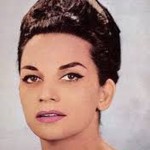
Delkash, Esmat Bagherpour Baboli (1924 – 2004) was a popular Iranian singer with a rare and unique voice and vocal range. She was one of the most prominent Iranian vocalists. She came to Tehran to study, but she was discovered soon and was introduced[1] She was named Delkash by Khaleghi.

Delkash started public singing in 1943 and was employed in Radio Iran in 1945. There, she worked with the composer Mehdi Khaledi for seven years, until 1952, which made them both very famous. The best of her songs were written by Rahim Moeini Kermanshahi, Iranian lyricist, and Ali Tajvidi, Iranian composer, from 1954 until 1969.

She also worked as a song writer under the pen name of Niloofar and played in a few Iranian movies, including Sharmsaar, Maadar, Farda Roushan Ast, Afsoungar, and Dasiseh. She worked with singer and electric guitar musician Vigen Derderian. Their duet “Delam Mikhast” became very poular.