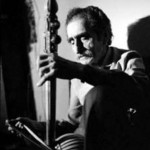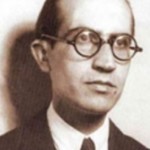
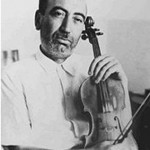
Abol Hasan Saba

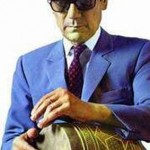
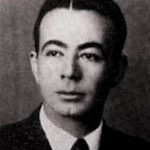
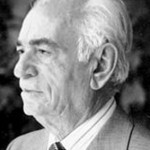
Abol Hasan Sabā (1902 – 1957), was a renowned Iranian musician, composer, violinist, and setar player. He studied several of Iranian and non Iranian musical instruments and became an Ostad in Radif, but selected violin and setar as his specific instruments. He was a student of Mirza Abdollah as well as Darvish Khan. Saba is considered one of Iran’s most influential figures in traditional and instrumental Persian music.

Amongst his many students who went on to become great masters of Persian traditional music were Faramarz Payvar, Manoochehr Sadeghi, Habibollah Badiei, Rahmatollah Badiyi, Abbas Emadi, Ali Tajvidi, Mahmoud Tajbakhsh, Sassan Sepanta, Parviz Yahaghi, Dariush Safvat, Gholam-Hossein Banan and Hossein Tehrani.
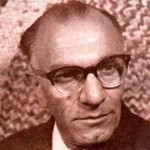
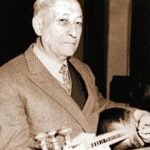
Javad Badizadeh

Javad Badizadeh (1902 – 1979) was one of the prominent musicians of his time, both as a singer and composer.

He is one of the first male singers in Iran whose songs were recorded and released on HMV label (1925). During the following 10 years he released 24 more records.

With the establishment of Radio Tehran, he was one of the first to join and alongside, Habib Samayi, Abolhasan Saba, Morteza Neydavoudi and Hossein Tehrani produced some of the most memorable pieces of traditional Iranian music.


Esmail Mehrtash

Esmail Mehrtash (1904-1980) was a tar player and teacher. He studied tar under Darvish Khan and Alin Naghi Vaziri. Hecreated a school for teaching music and speaking skills. Amongsts his students were, Abdolvahab Shahidi, Molook Zarrabi and Mohamad Reza Shajarian.


Ali Asghar Bahari

Ostad Ali Asghar Bahari (1905 – 1995) was an Iranian musician and kamancheh player. He was born in Tehran and started his music lessons under his grand father Mohammad Taghi Khan, who was a kamancheh player as well. After three years, his father sent him to his uncles who were all famous kamancheh players to learn more advanced techniques. His first major success was with Ebrahim Khan Mansouri’s Orchestra at the age of 18. He started his own music school in Mashhad, then he moved back to Tehran and became a kamancheh instructor in Honarestan under Ruhollah Khaleghi. He played with most famous Iranian musician such as Hossein Tehrani, Ahmad Ebadi, and Abolhasan Saba. He was also a professor of music in Tehran University for a few years.

Among his students who went on to become great masters of Persian traditional music in their own right were Mastro Mazdak Tehrani and Mortezâ Varzi.

Andre Hossein

Known in Iran also as Aminoullah Hossein (1905  – 1983) was a celebrated Iranian born composer of  the neo-Romantic style and a virtuoso tar soloist residing in Paris. He studied in Moscow, Russia and later in Germany where he attended the Berlin Conservatory (1934 – 1937). He later moved to Paris where he studied privately under Paul Antoine Vidal in Conservatoire de Paris. He is the first modern Iranian composer whose works were played by Western Symphonic orchestras.

In 1935 he wrote his first ballet, Towards the Light. He also composed numerous pieces for the piano. In the 40s he wrote a number of symphonies. Aminoullah’s love for his native Iran is evident in many of his early works. He converted to Zoroastrianism which influenced his musical work in his early symphonies such as “Persian Miniature”, “I love my Country” and especially “Symphony Persepolis” – also known as The Rubble of the Forgotten Empire (1947). Aminollah Hossein also made a symphony based on Khayyám poems in 1951. Other works by him include three piano concertos, Persian Miniature, Scheherezade (Shahrzad), and Arya Symphony. He also composed some film scores, including films directed by his son Robert Hossein, the Paris-born actor and director.

Qamar ol-Molouk Vaziri

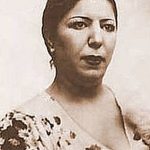
Qamar ol-Molouk Vaziri (1905 – 1959) has been called in Iran the “queen of Persian music”. She was the first prominent female vocalist of the 20th century in Iran. She was also a progressive thinker and befriended mostly those artists who were progressive and pro constitutionalist. Aref Ghavini and Iraj Mirza were both her close friends and artistic collaborators. Many of her songs are still popular and memorized by many Iranians.

Her early teacher was Morteza Neydavoud who introduced her to radifs (classical Persian music), but in her career she worked with many distinguished musicians of her time. What was significant in her condition was the fact that she began her career when women were not allowed to have their voices heard by men. She held her first open concert in 1924 after which she was arrested and hade to promise in she will not sing in public without a veil. It is said about her that she used to spend all she earned on the poor. The national radio paid her a meagre superannuation salary when she retired and it is known that she died in poverty.

Ahmad Ebadi

Ahmad Ebādi (1906–1992) was an Iranian musician and setar player. Born in Tehran, he was a member of the most extraordinary family of Iranian musicians. Ahmad’s father, Mirza Abdollah, is arguably the most influential figure in Persian traditional music, and his paternal uncle, Mirza Hossein Gholi, is also well known for his mastery in playing the tar. Ahmad’s paternal grandfather, Ali Akbar Farahani, was also a talented musician.

Ahmad started learning music at early age. At the age of seven, he was able to play Tombak well enough to accompany his father. Unfortunately he lost his father soon, but continued his education with his sisters especially Moloud Khanom. He became later one of the best setar players of his time.

For years he played on Iranian radio especially in the famous Golha programme, produced by Davood Pirnia. Ebadi had a unique style in playing the setar. He also invented a variety of different tunings for setar. He also trained a number of students amongst which were, Bahram Vadani and Behdad Babayi.

Ruhollah Khaleghi

Rūhollāh Khāleqi (1906 – 1965) also spelled as Khaleghi, was a prominent Iranian musician, composer, conductor and author. Ruhollah Khāleghi was born in Mahan, a small town near Kerman, in a musically minded family. He first became acquainted with the tar, but later started to learn to play the violin. As soon as Ali-Naqi Vaziri established his School of Music, Khāleghi left school and joined Vaziri’s school, where he studied for eight years. Soon he became his master’s assistant and was placed in charge of teaching music theory.

In 1944 Khāleghi established the National Music Society and in 1949 thanks to the efforts of this great artist, the School of National Music was founded. After his first journey to the former U.S.S.R. in 1955, he became involved in the Iran-Soviet Society and was selected as a member of its Board of Directors.

He also began to serve as the director of the Payām-e-Novin Magazine. His work, The History of Persian Music, which was published in two volumes, took shape during these years. His other published works include: Harmony of Western Music, Theory of Eastern Music, and Theory of Persian Music.

For many years Khāleghi worked as a musical advisor for Radio Iran and was one of the founders of the program known as Gol’hā (Flowers). He also conducted the Gol’hā Orchestra, for which he composed many pieces and revised the original compositions of his contemporaries as well as older masters.

Parviz Mahmoud

Parviz Mahmoud (1910 – 1996) was a Persian composer and conductor. He was the founder of the Tehran Symphony Orchestra in its modern form. His father Mahmoud Mahmoud was a famous Persian writer, researcher and politician. Parviz studied composition at the Royal Conservatory of Brussels and for a few years he was professor and director of Tehran Conservatory.

In 1959 he moved to the United States and did not continue his musical activities seriously anymore. A few years later he received his PhD from the University of Indiana. His dissertation was about the theory of Persian music and its relation to Western practice.

Gholam-Hossein Banan

Gholām-Hossein Banān (1911 —1986) was an Iranian musician and singer. He was born into a musical family. His father, Karim Khān Banān ol-Douleh Nurí was was an accomplished pianist (and calligrapher); one brother and two sisters also played the tar as pupils of the renowned musician Morteza Neydāvood. From the age of six he began to take lessons in singing and playing the piano and organ through the encouragement of Morteza Neydāvood. Gholām-Hossein’s first teachers were his parents. He subsequently studied with Mirzā Tāher Ziā oz-Zākerin Rasā’í  and Nāser Seif. Ali-Naqi Vaziri later introduced him to Rouhollah Khāleghi.

Banān joined the Iranian National Music Association in 1942, and appeared on Iranian National Radio that same year. He then joined the orchestra of Javād Maroufi, becoming the lead vocalist. In 1957, or 1958, (1336 AH) Banān became blind in his right eye following a car accident. He is still remembered by lovers of traditional Persian music.

Fereidoun Farzaneh

Fereidoun Farzaneh (1911-1985) was an Iranian composer of Western classical music. He was the son of Ismail Farzaneh (Iranian diplomat and ambassador) and Fatemeh Sheikh.

He completed his studies at the Music Conservatory in Brussels, Belgium, before returning to Iran. After retirement, he moved to Spa, Belgium.

Hossein Tehrani

Hossein Tehrāni (1912 – 1974) was an Iranian musician and tonbak player. He is regarded as the father of the modern tonbak. He was born in Tehran. At an early age he was going to Zurkhaneh (an Iranian gymnasium) and was impressed by the big clay vase covered on open bottom with skin called Zarb. At the age of he found a similar type of Zarb but in a smaller size which was called tonbak and began practicing by himself.

In 1928 Hossein Tehrani became interested in studying music professionally, and took private lessons from music master and kamancheh player Hossein Khan Esmail-Zadeh.  He was keen to observe different tonbak playing styles so he attended the music classes of master tonbak players such as Reza Ravanbakhsh and Kangarlo. He wanted to learn more about Iranian traditional music, and therefore formed a relationship with the great music master and multi-instrumentalist Abolhasan Saba, from whom he learnt music theory and different aspects of Iranian traditional music. He also wrote a book titled Amouzesh Tonbak about the style and practice of the tonbak.

In 1940 the first radio station was established in Tehran and Hossein Tehrani was an active tonbak player accompanying musicians while performing live music programmes. He was a permanent member of the National Music Ensemble and National Music association. Hossein Tehrani formed and organized a tonbak players ensemble with seven members and performed several pieces with his group for the first time at the Shiraz Arts Festival.

Majid Vafadar

Majid Vafadar (!912 – 1978) was a violinist and a composer.

He was a student of Hossein Esamilzadeh, Reza Mahjubi, Parviz Yahaghi and Abolhasan Saba. He began to perform solo concerts in the 50s. Alinaghi Vaziri was so impressed with him that encouraged him to join the National Radio organisation. He was the leader of Radio Iran’s Orchestra number 3 until 1960.

He has left some 300 pieces of work. some of which were written for the cinema. He was involved in some of the most memorable iranaian songs such as mara beboos, golnar, and gol amad bahar amad.

Javad Ma’roufi

Javād Ma’roufi (1912 — 1993), was a celebrated Iranian composer and pianist. He was born in Tehran to the musician father Musā Ma’roufi and mother Ozrā Ma’roufi who both were distinguished pupils of Darvish Khan, a renowned music master of the time in Iran. He was taught in music first by his father, playing both the tar and the violin. At fourteen he attended the Academy of Music of which Ali-Naqi Vaziri was the director and where he studied the piano under the music master Tatiana Kharatian. During this period he studied works by Chopin, Mozart, Beethoven and Bach. In addition to studying western classical music, he studied Persian classical music under Ali-Naqi Vaziri.

Javād Ma’roufi was one of the most notable composers of the Persian classical music and one of the first pianists who wrote Persian pieces for the piano. Amongst his celebrated pieces are Khābhā-ye Talā’i (Golden Dreams) and Jilā.