Sani-ol-molk

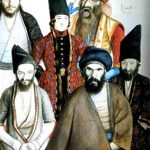
Mirza Abol-Hassan Khan Ghaffari Kashani, (1814 – 1866) known as Abol-Hassan the Second and entitled “Sani ol-Molk”, son of Mirza Mohammad Ghaffari, the talented painter and graphic artist of the early 19th century was born in Kashan around 1814. After his elementary schooling, he was sent, at the age of fifteen or sixteen, to learn painting with Master Mehr-Ali Esfahani, the famous painter and the naqqashbashi (grand painter) of Fath-Ali Shah of Qajar.

Mirza Abol-Hassan Khan, driven by his innate taste and inherited talent, and with the guidance and tutelage of his instructors, gradually attained the perfection of his art, and soon became a renowned artist of his time. In 1842, during the reign of Mohammad Shah of Qajar, he was allowed to paint a portrait of the monarch, thus becoming a court painter, and soon after was appointed naqqashbashi of Mohammad Shah’s court. Mohammad Shah’s oil portrait dated 1842 is considered his earliest painting.

Mirza Abol-Hassan Khan went to Italy, then the artistic centre of Europe, in order to see and study the works of the great and famous European artists, particularly those of Renaissance, and become acquainted with their painting methods. He spent some time in Italy visiting and studying in the academies and museums of Rome, Vatican, Florence and Venice, making copies of the works of Italian artists. When he returned to Iran Naser o Din Shah was on the throne. His illustrations for the book of “one thousand and one night” became famous for his use of contemporary personalities to depict characters in the stories.

Kamal-ol-molk

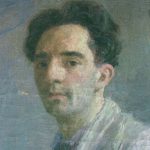
Mohammad Ghaffari (1847 – 1940), better known as Kamal-ol-molk was a celebrated Iranian painter. He was  born in Kashan to a family greatly attached to art. Kamal’s uncle, Mirza AbolHassan Khan Ghaffari, known as Sanee-ol-Molk, was a celebrated painter. His father, Mirza Bozorg Ghaffari Kashani, was the founder of Iran’s painting school and a famous artist as well. His brother, AbuTorab Ghaffari, was also a distinguished painter of his time. Mohammad developed an interest in calligraphy and painting at a young age.

Upon completion of his primary education, Mohammad moved to Tehran and registered at Dar-uol-Fonun School, a modern institute of higher learning in Persia, where he studied painting with Mozayyen-ol-doleh, a well-known painter who had visited Europe and studied Western art. In his visits to Dar-ol-fonoon, Naseral-din Shah came to know Mohammad Ghaffari and, having observed his talent, he invited him to the court. Naser-al-din Shah Shah gave him the title “Kamal-ol-Molk”. He created over 170 paintings. Unfortunately, most of these paintings have either been destroyed or lost.

Abolhassan Khan Sadighi

Abolhassan Khan Sadighi (1894 – 1995) was a prominent Iranian painter and sculptor. He was attracted to drawing and painting from an early age. During his high school days he went away to Master Kamal-ol-Molk’s classes at the School of Delicate Crafts. He soon became one of the most remarkable students of the school. During his next three years in that school, he succeeded in getting a high degree diploma in painting. Master Kamal-ol-Molk, seeing his talent and efficiency, appointed him as a teacher of painting and drawing at the school. Shortly after becoming a teacher, he became attracted to sculptures. At that time, the art of sculpture was almost unknown in Iran and Master Abolhassan Khan Sadighi’s work became the beginning of a new movement in the field in Iran.

He also taught at the Faculty of Fine Art of Tehran university for many years, running its sculpture section. He retired from the university in 1967 and soon after also from the art world as a whole.

Hossein Behzad

Hossein Behzad (1894 – 1968) was a prominent miniaturist from Tehran who tried to revive the Iranian miniature traditions. He also simplified Persian miniatures and introduced more Iranian elements into this tradition which had not changed since the Safavid period.

He became popular and internationally known as a Persian miniaturist and won many awards. In 1968 Behzad was give an honorary professorship by the College of Ornamental Arts. His works have been displayed across the world. To celebrate the millennium of Avicenna, in 1953 he held an exhibition at the Iran Bastan Museum. Shortly after, and to much critical acclaim, Behzad held an exhibition, which was sponsored by the French government, at the Museum of Modern Art in Paris. In 1956, fifty Behzad miniatures were put on display in the Library of Congress, Washington DC. As Behzad became a living master, he held exhibitions across the world including London, Prague, New York, Boston and Brussels, as well as in India and Japan. He created over 400 works. The “Behzad Museum”, located in Tehran’s Sa’d Abad Palace, holds the largest collection of his works.

Hoseyn Ghollar-Aghasi

Hossein Qollar-Aghasi (born Tehran, Iran 1902–1966) was an Iranian painter. The son of Ali-Reza Ghollar-Aghasi, a a famous and experienced designer of tile-work patterns, he acquired rudimentary skills of traditional painting in his father’s workshop. He was one of the developers of “Coffee Shop Painting”, creating canvas works and mural frescoes based on religious traditions and national epics. Coffee shop painting was a new phenomenon in Iran’s art history. While preserving all the logical, religious and traditional style, it flourished as a sign of respect for popular beliefs. People needed images of their saints and their heroes.

Hossein Qollar-Aghasi was enraptured with vivid colors, and he sought every pretext to reproduce the lively tones found in ancient Iranian illuminations and tile-works in his paintings. Really, he was a decorative painter and a painter of the “School of Imagination”. During the forty years or so he painted; he trained a big number of students and put all his talent and faith at the service of developing “Coffee Shop Painting”.

Abolhassan Etessami

Abolhassan Etessami (1903 – 1978) was an Iranian architect, calligrapher, painter, and novelist. His father Ebrahim Etessami was the head of finance of the Iranian province of Azerbaijan; and his brother Yussef Etessami was the founder of the Bahar journal, and the father of the poet Parvin Etessami. Abolhassan Etessami was educated in Tehran at the Aghdasieh School, the American School, and the Kamal-ol-molk School of Fine Arts. Then he spent some years in Isfahan to learn architecture and decoration techniques, and later went to work at Tehran University.

Abolhassan Etessami produced a series of architecture projects, detailed maquettes of which were made by himself. On the Iranian Ministry of Fine Arts’ request, the maquettes were sent to Brussels’ 1958 Universal Exhibition, where Abolhassan Etessami was awarded the gold medal in the individual presentation category. The maquettes were later bought by the National Museum of Iran, and included in the permanent collection of the Islamic arts division. In addition to architecture projects, Abolhassan Etessami left a series of oil on canvas paintings including Some ruins in Dowlat-Abad, A village home in Niavaran, and Pasteur’s intercession for Napoleon, and some novels including, The left-alone man and The malicious Mohil-o-doleh.

Mohammad Modabber


Mohammad Modabber (died in 1966) was an Iranian painter and was one of the developers of “Coffee Shop Painting” style.

He learned painting at Seyed Ghaffar Isfahani’s school. He resorted to the use of perspective and other elements of European religious painters.


Houshang Pezeshknia

Houshang Pezeshknia (1917-1972).

He graduated from Istanbul Academy of Fine Arts where he studied under the supervision of prof. Leopold Levy. He held his first solo exhibition in 1947 in Tehran.

He was a follower of the Fauvist school emphasising strong colours and tones instead of representational or realistic forms.

Jalil Ziapour

Jalil Ziapour (1920 – 1999) was born in Bandar-e Anzali and was a painter and university professor. He was one of the pioneers of modern art in Iran. Indeed, some consider him the “father of Iranian modern art”. He studied in the School of Fine Arts in Tehran. In the first period of the school (1941–1945) three painters graduated from the school and Ziapour received the first place. He then headed to France and continued studying in École nationale supérieure des Beaux-Arts.

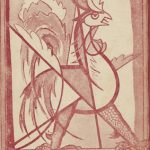
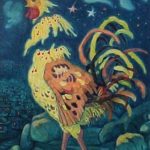
He published a number of books and has left over 40 pieces of art. he was one of the founders of the “khoroos jangi” (Fighting Cock) art group.

Mahmoud Javadipour

Mahmoud Javadipour (1920 – 2012) was a painter and graphic artist who is considered to be one of the pioneers of modern art in Iran. He graduated from The School of Fine Arts, University of Tehran. He then studied graphics at Munich Academy of Fine Arts. He was awarded a doctorate in fine art by the  Iranian Cultural High Council.

He has left an enormous body of work with a range of styles in which he experimented. Although he remained a figurative painter he made a lasting contribution to modern art. A number of famous Iranian modernist painters were trainecd and influenced by him.

In 1949 together with Hosein Kazemi he established Apadana, the first private art gallery in Iran.

Abdollah Ameri

Abdollah Ameri born in 1922 in Tehran and a graduate of Tehran University\’s Academy of Fine Arts.

One-man show in the Talar-e Farhang, Tehran, and group shows in various galleries and cultural institutes including the Mehregan Club and in the Second and Third Tehran Biennales. Ameri’s post-Revolution works have not been publicly exhibited.

Sadegh Barirani

Sadegh Barirani was born in 1923 in Bandare Anzali in Iran. He studied at the School of Fine Art in Tehran University. He was part of The Fighting Roosters, a group that pushed the artwork in Iran to evolve with the rest of the world. The Fighting Roosters was a group of college students at the School of Fine Arts in Tehran University from 1948 to 1953. This group academically studied European modern art styles, though they were discouraged by their professors and constantly passed over for expositions. However, the group understood and appreciated modern art and allowed it to influence their classic training.

For his pieces, Barirani created a brush with both thick and thin bristles that required swift movements. Barirani’s technique was inspired by poems and became known as mystic lyricism. Barirani excelled and earned grants to travel to the United States and France to study at different universities. He placed in a number of world art competitions, and once he moved back to Tehran, he became a professor of fine arts. He is known in Tehran for creating hundreds of modern posters for events in the city, like shows, festivals and art events.

He now lives in California and is still evolving his artwork at 93 years old.


Hossein Kazemi

Hossein Kazemi (1924-1996) was a painter and one of the pioneers of contemporary art in Iran.

He was a graduate of Tehran University’s Fine Art school and became later a Professor and head of the Department of Painting in the Decorative Arts Faculty.

He had numerous solo or group exhibitions and has several works in private collections and museums. He received the gold medals of the 1st and 2nd Tehran Biennales.


Ahmad Esfandiari

Ahmad Esfandiari (1922- 2013) was one the first graduates of the Tehran University’s Fine Arts faculty. He used modern Western combinations of familiar Iranian art motifs and elements such as miniature, batik, qalamkar, and tilework. He created a new eclectic style of his own. The resulting works remind one of the Impressionist and Post Impressionist styles with their warm and lively compositions and harmony.

The stylization of form and traditional motifs, attention to light, a colorful palette, and his constant experimentation have created an impressive amount of variety in his work including traditional forms, complete abstraction, expressionism, pointillism, and even Cézanne inspired works.


Abbas Blouki-far

Abbas Blouki-far, born in Tehran, (1924-2009).

He has painted Coffee Shop Painting more than 50 years, while teaching at the University. He’s participated in more than 30 exhibitions in Iran and abroad; deceased.

Behjat Sadr

Behjat Sadr (1924 – 2009) was an Iranian painter whose works have been exhibited in major cities across the world. Sadr began her studies at the University of Tehran faculty of fine arts. After her graduation, she won a scholarship to the Accademia di Belle Arti in Rome at the Naples Academy of Fine Arts.

Sadr’s first major exhibition was at the twenty-eighth Venice Biennial in 1956. In 1957, Sadr returned to the University of Tehran as a member of faculty and taught there for almost 20 years. Sadr is regarded as one of Iran’s influential and radical Modern painters. She was a pioneer of the visual arts in Iran and one of the first women artists and professors to appear on the international biennales scene in the early 1960s. Sadr offers the singular testimony of a nascent cosmopolitan modernity that emerged in Tehran, Rome and Paris, in cities where she studied and exhibited, embodying an extraordinary fusion of work and life.

Mohsen Vaziri-Moghaddam

Mohsen Vaziri-Moghaddam (1924 – 2018) was an Iranian painter and a professor of art. He has been described as the “pioneer of modern Iranian abstraction.” He was a graduate of Fine Arts School, University of Tehran. In 1955 he moved to Italy for further studies. In 1958, he was awarded Diploma of Fine Arts from Accademia di Belle Arti of Rome. In 1964 he returned to Tehran as a Professor of Art at the Faculty of Decorative Arts and Faculty of Fine Arts of Tehran University.

After studying and analysing the new modern art movements in Italy Vaziri reached the conclusion that “painting is not a reconstruction of objective reality, but the artist has to create something that never existed before”.In 1957, a landmark year and turning point in his artistic career, he started experimenting with abstract art. His first abstract works date back to 1958-1959 and they fit in perfectly with the search for materials and brushstrokes happening in contemporary movements.

In 1985, Vaziri moved to Italy permanently with his wife and two children.

Monir Shahroudy Farmanfarmaian

Monir Shahroudy Farmanfarmaian (1924 -2019)  was an Iranian artist and collector of folk art. Her artistic practice weds the rigorous geometric patterns and cut-glass mosaic techniques of her Iranian heritage with the rhythms of modern Western geometric abstraction.

Farmanfarmaian studied at the Faculty of Fine Art, Tehran (1944-1946), before travelling to the United States. In New York she studied at Parsons School of Design and Cornell University, worked as a fashion illustrator, and was quickly absorbed into the city’s thriving avant garde art scene, became friends with artists and contemporaries Louise Nevelson, Jackson Pollock, Willem de Kooning, Barnett Newman, and Joan Mitchell. She painted, collaborated with Andy Warhol on illustrations for the now defunct Bonwit Teller department store, and under the tutelage of Milton Avery, she developed her talent for making monotype prints — some of which were presented at the Iran Pavilion during the 1958 Venice Biennale.

She returned to Iran in 1957 and began experimenting with techniques of reverse-glass painting, mirror mosaics, and the Sufi symbolism of classical geometrical design with a modern abstract expressionism and minimalism. “Ayeneh Kari” is the traditional art of cutting mirrors into small pieces and slivers, placing them in decorative shapes over plaster. Farmanfarmaian was the first contemporary artist to reinvent the traditional medium in a contemporary way. She soon reached international acclaim and held major exhibitions in Tehran, Paris, Venice and New York.

Marcos Grigorian

Marcos Grigorian (1925 – 2007) was a notable Iranian-Armenian artist and a pioneer of Iranian modern art.

Grigorian was born in Kropotkin, Russia, to an Armenian family from Kars who had fled that city to escape massacres when it was captured by Turkey in 1920. In 1930 the family moved from Kropotkin to Iran, living first in Tabriz, and then in Tehran. He Graduated in 1954 from the Accademia di Belle Arti in Rome. He then returned to Iran and opened the Galerie Esthétique. In 1958, under the auspices of the Ministry of Culture, he organized the first Tehran Biennial. Grigorian was also an influential teacher at the Fine Arts Academy, where he disseminated his enthusiasm for local popular culture, including tea-house paintings.

In 1975 Grigorian helped organize the group of free painters and sculptors in Tehran and was one of its founder members. Artists Gholamhossein Nami, Massoud Arabshahi, Morteza Momayez and Faramarz Pilaram were amongst the other members of the group. As a modernist pop artist Marcos Grigorian turned to ordinary objects and popular ethnic forms and approaches. He used ethnic food such as “Nan Sangak” and “Abghousht” to evoke authenticity in his work. Grigorian was a trend setter in experimenting with Earth Art, in Iran. Grigorian left Iran in 1977 living for a short time in the United States before moving to Yerevan, Armenia.

Mansoureh Hosseini

Mansoureh Hosseini  (1926 – 2012) was an Iranian contemporary artist and one of the pioneers of the country’s modern art. She was educated at the University of Tehran, the Faculty of Fine Arts, from which she graduated in 1949. Mansoureh left Iran in the early 1950s to live in Italy, where she furthered her education at the Rome Academy of Fine Arts leading up to her artistic début at the 28th Venice Biennial in 1956.

After a moderately successful period in Italy, Mansoureh returned to Iran in 1959 and won several awards in the Tehran Painting Biennial. In 2004 she exhibited at the Tehran Museum of Contemporary Art. Mansoureh is best known for having produced works in both figurative and abstract styles. Her works have often included elements of Kufic script. She is known, along with Behjat Sadr, to use traditional elements of both the Persian culture and that of contemporary Europeans. She was considered to be an experimentalist.

Bahram Alivandi

Bahram Alivandi (1928 – 2012) was an Iranian-born Modern artist living in Vienna. He is known primarily for his paintings, which typically depict stories from Persian mythology and literature, and express oriental mysticism. He has also produced a number of wall tapestries that, like his works on canvas, demonstrate his own instantly recognisable visual language.

He gained his artistic training in Tehran, initially at the Kamal-ol-Molk Academy of Art, then under the tuition of French masters at Tehran’s School of Fine Arts (closely modelled on the French École des Beaux-Arts), from which he graduated with distinction. He completed a further degree in painting at the College of Decorative Arts, Tehran. Alivandi was one of Iran’s modernists painters. He left Iran several years after the Islamic revolution of 1979 and lived and worked in Vienna from 1983 to 2012.

Alivandi’s work is rich in symbolism and oriental motifs. He draws influence from Persian culture, depicting characters and stories from legends and epic poetry. His works include a series of large-scale oil paintings executed in the 1980s which depict such important figures as Mithra, Jesus Christ, the Simorgh, and Ferdowsi. In terms of technique his work is at times traditional and at times highly original. Alivandi’s early paintings, including those from the 1980s, use the now-traditional medium of oil on canvas, yet his aesthetic style, which recalls the stained glass of medieval churches, is highly personal. During the 1990s Alivandi continued to work in oils, but abandoned the traditional canvas, choosing instead to apply his paints directly to newspaper; a method pioneered by the cubists in the early 1900s. Since circa 2000, he increasingly worked with the angelique pointillage technique.

Abdolreza Daryabeigi

Abdolreza Daryabeigi (1930 – 2012), was an Iranian artist and innovator of Iranian modern art. Daryabeigi was born in Rasht in northern Iran. He studied and attained bachelor’s degrees in both World History and Geography from Tehran University. He studied art at the studios of both Marcos Grigorian and Ali Azargin. He first exhibited his work in 1960. He also took a further degree, in lithography, at the University of Salzburg in Austria.

In 1975 he joined the group of free painters and sculptors in Tehran founded by Marcos Grigorian. Artists Gholamhossein Nami, Massoud Arabshahi, Morteza Momayez, Sirāk Malkoniān and Faramarz Pilaram were amongst the other members of the group. In 1979, Daryabeigi moved to France and lived there until his death in 2012.

Mahmoud Farshchian

Mahmoud Farshchian (born January 24, 1930) is a Persian painter and miniaturist. He was born in the city of Isfahan in Iran, and it was here where he started to learn art, painting and sculpting. Farshchian is the founder of his own school in Iranian Painting, which adheres to classical form while making use of new techniques to broaden the scope of Iranian miniature painting. He has brought new life to this art form and has freed it from the symbiotic relationship it has historically had with poetry and literature, to give it an independence it had not previously enjoyed. His works have been hosted by several museums and exhibitions worldwide. He is the most prominent moderniser of the field of miniatures, an art form which was first established in Ancient Persia and later spread to China and Turkey and other Middle eastern countries. He has been exhibited in 57 individual shows and 86 group shows in Iran, Europe, America and Asian countries. His works are represented in several museums and major collections worldwide. Farshchian resides in New Jersey.
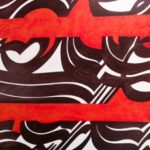
Hannibal Alkhas

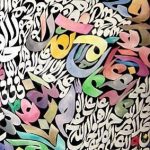
Hannibal Alkhas (1930 – 2010) born in Kermanshah was one of the forerunners of modern figurative painting in Iran. He was the son of the Assyrian writer Rabi Adai Alkhas.

He graduated from the Art Institute of Chicago in 1959 and taught at Tehran University (School of Fine Arts) from 1960-64. During the same period he established Gilgamesh Gallery, one of the first modern Art Galleries in Iran. Since then he has taught at a number of institutions including the University of California at Berkeley and Los Angeles. and Azad University in Tehran.
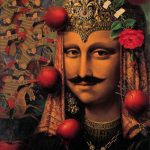
Hannibal experimented with different techniques and materials with the different “isms” of art but developed his own unique style of figurative painting. His paintings are featured in the Fine Arts Museum and Gallery of Modern Art in Tehran and the Helena d’ Museum in Tel Aviv.

Jazeh Tabatabai

Jazeh Tabatabai  (1931 –2008) was an Iranian avant-garde painter, poet, and sculptor. Tabatabai received over 10 major international awards for his paintings and sculptures. His works can be found in major collections and in many museums around the globe including the Louvre and the Metropolitan Museum of Art.  Additionally, his works have been displayed in exhibitions in England, India, Italy, Germany, Spain Greece, Australia, France and the United States.
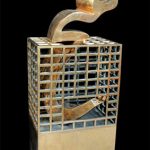
He was the founder and director of the Iran Modern Art Gallery in Tehran, Iran. He is considered as another painter of the saghakhaneh school.

Parviz Kalantari

Parviz Kalantari (1931-) is an Iranian painter. He  was born in 1931 in Taleghan city. From the early ages, he showed great interest in painting and later developed major skills in drawing. In 1959 Kalantari finished studying painting at Tehran University, Department of fine arts. He has held various exhibitions inside and outside of Iran.

His paintings are interesting yet simple, his simplicity and modest techniques make the paintings attractive to the audience and this minimalism is a theme that runs through his life. Parviz Kalantari’s current house was designed and built by his brother, Iraj Kalantari, one of the most influential Iranian architects whose dedication to Iran’s contemporary architecture is significant. The interesting aspect of parviz Kalantari’s works is that his subjects of interest are mainly architectural.


Sirak Melkonian

Sirak Melkonian (1931-) is an Iranian painter and graphic designer currently living in Toronto.

Sirak Melkonian was born in Fardoun Village, Iran in 1931.  He studied painting with Marcos Grigorian, a pioneer of Iranian Modern art. In the 1950s, Melkonian was associated with Studio Démon, a small arts studio in Tehran that produced popular works.

He gained national recognition in 1957, winning a prize at the Contemporary Iranian Artist Exhibition of the Iran American Society. This was followed by the Imperial Court Prize at the Tehran Biennale in 1958 and first prize at the Paris Biennale in 1959. The artist has exhibited at the Grand Palais and the Salon De Montrouge in Paris, as well as Washington International.

Bahman Mohasses

Bahman Mohasses (1931-2010) was a painter and sculptor and part of the modern art movement in Iran.

Bahman Mohasses was born in March 1931 in Rasht. He studied art at Tehran University. he later joined the “Cockfight” art and culture society (Anjoman-e Khorous Jangi), established by Jalil Ziapour, and was, for some time, the editor of the literary and art weekly “Panjeh Khoroos” (Rooster Foot). Through this society he was part of an avant-garde artistic movement, which included his good friend Nima Yooshij, the father of modern Persian poetry and Sohrab Sepehri, Houshang Irani and Gholamhossein Gharib, all progressive artists of their time. In 1954 he moved to Italy to study in the Fine Art Academy of Rome.

He has had a number of solo and group exhibitions in Italy and elsewhere. He returned to Iran in 1963. He stayed in Iran until 1968, before returning to Rome, where he received commissions for statutes to be placed in Tehran. Some of his public works in Iran were destroyed or damaged after the 1979 Revolution, with the artist subsequently destroying all his remaining works in Iran. He occasionally travelled to Iran and died in self-imposed seclusion in Rome in 2010.

Nasrollah Afjei

Nasrollah Afjei (1933-) is a calligrapher painter.

His first degree was from Iranian Calligraphists’ Association and he taught at Tehran Schools and Universities from 1997- 2004.

Afjei has focused on calligraphy. He has learnt ‎different techniques and experienced with a variety of materials developing a unique style.‎

Naser Oveisi

Naser Oveisi (1934-) is a painter and one of the influential followers of the Saqakhaneh style.

He has won numerous awards from international exhibitions and biennials.

Massoud Arabshahi

Massoud Arabshahi ( 1935 -) is an Iranian painter.

Arabshahi held his first solo exhibition at the Iran-India Centre, Tehran, in 1964, four years before graduating from the College of Decorative Arts, Tehran. His work includes oils on canvas, sculptures and architectural reliefs- among the latter commissions for the Office for Industry and Mining, Tehran, 1971, and the California Insurance Building, Santa Rosa, California, USA, 1985.

His sources of inspiration comprise Achaemenid and Assyrian art as well as Babylonian carvings and inscriptions. Combining tradition and modernity. His work has been shown in a number of solo and group exhibitions in Iran, Europe and the United States including Two Modernist Iranian Pioneers, at the Tehran Museum of Contemporary Art, 2001; and Iranian Contemporary Art, Barbican Centre, London, 2001. He lives and works in Tehran and California.

Iran Darroudi

Iran Darroudi (1936 -) is an Iranian artist.

Darroudi studied at Ecole Superier des Beaux-Arts in Paris, history of art at the École du Louvre in Paris, stained glass at the Royal Academy of Brussels, and television direction and production at the R.C.A. Institute in New York. Darroudi’s first solo exhibition was held in Miami in 1958 at the invitation of the Florida State Art Centre. Her first exhibition in Iran was held in April 1960 at the Farhang Hall.

In 1968 she made a documentary about the 1968 Venice Biennial. She was appointed as an honorary professor at the Industrial University of Tehran, teaching art history. She held successful exhibitions in Paris and at the Atrium Artist Gallery, Geneva, and a month later at Galarie 21, Zurich. In 1974 a film on Darroudi’s life was broadcast on American television. She met Salvador Dalí and Tago Seizi. In 1976 she exhibited at the Mexican Museum of Art.

Gholamhossein Nami

Gholamhossein Nami is an Iranian contemporary painter, author and educator who was born in 1936 in Ghom. He graduated from the School of Fine Arts, Tehran, Iran, 1963. He also holds a Master of Fine Arts degree from the University of Wisconsin, Milwaukee, 1980. In 1975 he joined the group of Free Painters and Sculptors in Tehran which Marcos Grigorian had helped to organize. Massoud Arabshahi, Morteza Momayez, Abdolreza Daryabeigi and Faramarz Pilaram were amongst the other members of the group.

He was also Instructor at the Secondary Schools of Fine Arts, Tehran, Iran, 1964-1986. Art. professor School Architect, Science, and Industry, Un iversity Tehran, Iran, 1972-1987, School Decorative Arts, Arts University, Tehran, Iran, 1973-1977, School of the Arts and Architecture, Free Islamic University, Tehran, since 1986. Vice chairman visual arts selection committee National Iranian Commission for Unesco, Tehran, 1973-1981.

Manouchehr Motabar


Manouchehr Motabar was born in Shiraz, Iran, in 1936.  After graduating from the Tehran College of Fine Arts, he left Iran to take a graduate course in art education in Indiana, USA and participated in drawing courses at the Art Students League of New York.  Since his return to Iran, he has been teaching painting and drawing in schools and colleges of visual arts in Tehran.

Since 1963, his work has been exhibited in national and international solo and group  exhibitions and in 1985 he won the International Exhibition of Contemporary Painters Award in Monaco.  Motabar was paid homage by the Imam Ali Museum in Tehran in 2006.

Mansoor Ghandriz

Mansoor Ghandriz (1936 – 1966 ) was an Iranian painter, born in Tabriz. He used Iranian forms in modern art and was one of the creators of the Saghakhane movement in Iranian painting. He studied at Tehran University, Faculty of Fine Arts. He alongside a number of other artists founded Iran Gallery which was one of the famous art galleries in Tehran. It has now changed name to Ghandriz Gallery.

While still in high school, Ghandriz was drawn to the progressive realist paintings of Ilya Repin (1844–1930) and Russian-Armenian seascape artist Ivan Aivazovsky (1817–1900). Later in college, and before turning to a paradigmatic exhortation of modernist language within local Iranian narrative, and developing his own semi-abstract style, he was introduced to European modernism, and he delved into the tradition of Russian realists and European classical and figurative art, Incorporating the figurative techniques of old masters, he created his own corporeal abstraction, which also indicates a process of gradual formalization, progressing from free forms to order. Matisse, Picasso, and Persian miniature paintings inspired Ghandriz’s early figurative work. He chose, as a critic commented, “mystical symbols to combine traditional and modern elements into his abstract designs.”

Charles Hossein Zenderoudi

Charles Hossein Zenderoudi (1937 Tehran) is a renowned Iranian painter and sculptor, known especially as a pioneer of Iranian modern art. He is one of the founders of the saghakhaneh style. He is a graduate of Fine Arts from Tehran University. He also studied in Paris.

His interest in Iranian-Islamic traditions, his acquaintance with calligraphy and his affiliation and sympathy for traditions were what helped him to reach his own personal unique style. In the late 1950s that Zenderoudi created the Saqqa-khaneh movement. A reaction to Western art and the relentless clash between traditional and modernist Iranian art, the Saqqa-khaneh lobbied for the incorporation of national, folkloric and religious elements into Iranian art. In essence, Saqqa-khaneh took pride in Iranian-ness and sought to mesh Iranian heritage with Contemporary art, proposing a re-reading of cultural content by means of a referential continuity.

He left Iran for Paris in 1961 and chose painting as his career. He met artists like Alberto Giacometti, Stephen Poliakoff and Lucio Fontana and writers such as Eugène Ionesco. Zenderoudi has received many accolades and won many international awards, starting at the biennales of Venice in 1960 and São Paolo in 1961, when he was still in his early 20s. Following the 1963 acquisition by New York’s Museum of Modern Art of his K+L+32+H+4, which not only marked the first of his paintings to enter a major public collection but also served as a catalyst for other museums to follow suit, most of the world’s prominent art institutions have sought to include his works in their collections – London’s British Museum, Paris’s Centre Pompidou and Copenhagen’s Statens Museum, among others.

He has been living in Paris and New York since 1961.

Faramarz Pilaram

Faramarz Pilaram (1937 – 1982) was a calligrapher and one of the pioneers of saghakhaneh style. He studied painting and interior design graduating from Tehran’s College of Decorative Arts. He also studied for a year in France in 1970.  where he stayed for a year.

He is renowned for his experiments with Farsi calligraphy and his reinterpretation of its traditional form, particularly the nasta’liq style of script. As a contemporary of  Parviz Tanavoli, Massoud  Arabshahi, Sadegh Tabrizi, and Charles Hossein Zenderoudi, Pilaram is widely regarded as one of the pioneers of the ‘Saqqakhaneh School’, particularly in his rendering of calligraphy.

Pilaram held numerous solo exhibitions in Tehran abd abroad. His work is held in collections including MoMA, New York, Tehran Museum of Contemporary Art, and Jahan-Nama Museum, Tehran.

Ali Akbar Sadeghi

Ali Akbar Sadeghi (1937 – ) a graduate of the College of Fine Arts, University of Tehran, is an Iranian painters and artists. He is among the first individuals involved in the Centre for the Intellectual Development of Children and the Youth, and was among the founders of the Film Animation department of this institute.

In 1989 he founded Sabz Gallery, which was actively and continuously exhibiting the works of Iranian painters until 2003. In total, he has participated in over 25 individual and group exhibitions, over 7 volumes of books of the collection of his works have been published, and he has been a member of jury panels in over 10 biennial exhibitions. His style is surrealism based on Iranian forms and compositions.

Sadeghi’s style is a form of Persian surrealism, based on forms and compositions of traditional paintings, the use of Iranian iconography, and the use of Persian cultural motifs, signs and myths, full of movement and action, in prominent and genuine oil colors, in large frames, very personal, reminiscent of epic traditional Persian paintings and illustrations.

Parviz Tanavoli

Parviz Tanavoli (1937 -) is an Iranian sculptor and painter. He has lived in Vancouver, Canada since 1989.

Tanavoli’s work has been auctioned around the world making him one of the most expensive living Iranian artist. Upon graduating from the Brera Academy of Milan in 1959, Tanavoli taught sculpture for three years at the Minneapolis College of Art and Design. He then returned to Iran and assumed the directorship of the sculpture department at the University of Tehran, a position he held for 18 years until 1979, when he retired from his teaching duties.

Since 1989 Tanavoli has lived and worked in Vancouver. His latest solo exhibition was a retrospective held in 2003 at the Tehran Museum of Contemporary Art. Prior to that he had held solo exhibitions in Austria, Italy, Germany, United States and Britain. His work has been displayed at the British Museum, the Grey Art Gallery, New York University, the Isfahan City Centre, Nelson Rockefeller Collection, New York, Olympic Park, Seoul, South Korea, the Royal Museum of Jordan, the Museum of Modern Art, Vienna, Museum of Modern Art, New York, Walker Art Centre, Minneapolis, Hamline University, St. Paul and Shiraz University, Iran.  He belongs to Saghakhane group of artists. He has been influenced heavily by his country’s history and culture and traditions.