Agha Bozorg mosque

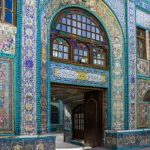
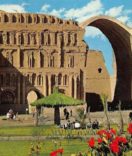
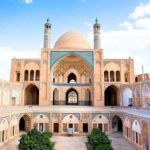
Agha Bozorg mosque is a historical mosque in Kashan, Iran. The mosque was built in the late 18th century by master-architect Ustad Haj Sa’ban-ali. The mosque and theological school (madrasah) is located in the center of the city.

Agha Bozorgh Mosque was constructed for prayers, preaching and teaching sessions held by Molla Mahdi Naraghi II also known as Mulla Mohammad Naraqi, known famously by his title of Āghā Bozorgh (literally meaning big or great lord) given to him by the Shah himself. Molla Mahdi Naraghi II was the son of the legendary Mulla Ahmad Naraqi (also spelled sometimes as Naraghi) who was the second strongest person in Iran after the king himself, Fath-Ali Shah Qajar.

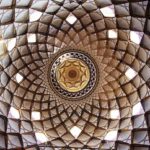
The mosque has been described as “the finest Islamic complex in Kashan and one of the best of the mid-19th century”. Noted for its symmetrical design, it consists of two large iwans, one in front of the mihrab and the other by the entrance. The courtyard has a second court in the middle which comprises a garden with trees and a fountain. The iwan in front of mehrab has two minarets with a brick dome. It was here where Ustad Ali Maryam as a pupil started his career as an architect.
Nasir-ol-Molk Mosque

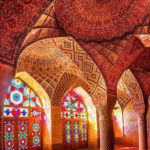
The Nasir al-Mulk Mosque, also known as the Pink Mosque, is a traditional mosque in Shiraz, Iran. It is located in Gawd-i Arabān quarter, near Shāh Chérāgh Mosque. It was built during Qajar dynasty rule of Iran. The mosque includes extensive coloured glass in its facade, and displays other traditional elements such as the Panj Kāse (“five concaved”) design. It is named in popular culture as the ‘Pink Mosque’, due to the usage of a considerable number of pink-colored tiles for its interior design.

The mosque was built during the Qajar dynasty, and is still in use. Construction began in 1876 by the order of the late Hassan Ali Nasir al-Molk, one of the lords and aristocrats of Shiraz, the son of Mirza Ali Akbar Qavam-ol-Molk, the ruler of Fars and was completed in 1888. The designers were Mohammad Hasan-e-Memār, an Iranian architect who had also built the famous Eram Garden before the Nasir al-Molk Mosque, Mohammad Hosseini Shirazi, and Mohammad Rezā Kāshi-Sāz-e-Širāzi.

Although stained glass is mostly popular in churches nowadays, the earliest discovered was in Syria from the 7th century. We do have evidence of techniques and recipes for obtaining stained glass by the Arabic chemist Jabir ibn Hayyan in his book Kitab al-Durra al-maknuna (The Book of the Hidden Pearl) published in the eighth century CE. Orsi windows are windows made of a mixture of wood and colorful glass in the Safavid and the Qajar dynasties. Orsi differs from stained glass used in many churches and Ottoman mosques which serve as illuminated images rather than a source of light. Light is a major feature in many mosques considering it being a major symbol of God in Islam. This is mentioned in a chapter in Quran: ″Allah is the light of the heavens and the earth″

Orsi in Nasir al Molk mosque creates a major definitive feature that makes up the colorful spiritual feeling of awe in the visitor when entering. The main purpose of Orsi is creating colorful light on the interior of the building. The mosque has seven wooden doors with colorful Orsi connecting the interior mosque to the courtyard. Orsi windows are characterized for using geometric shapes in their designs due to the prohibition of images and icons in islamic art.

Borujerdi House

The Borujerdi House is a historic house in Kashan, Iran. The house was built in 1857 by architect Ustad Ali Maryam, for the wife of Seyyed Mehdi Borujerdi, a wealthy merchant. The wife came from the affluent Tabatabaei family, which Seyyed Mehdi fall in love with her and built this house for her.
It consists of a rectangular beautiful courtyard, delightful wall paintings by the royal painter Sani ol molk, and three 40 meter tall wind towers which help cool the house to unusually cool temperatures. It has 3 entrances, and all the classic signatures of traditional Persian residential architecture, such as a biruni yard (exterior yard) and a daruni yard (interior yard). The house took eighteen years to build using 150 craftsmen.

Tekyeh Moaven al-molk

Tekyeh Moaven al-molk is in Kermanshah city of Iran. It was constructed during Qajar era as a Shia mourning site. In 1975 Tekyeh Moaven al-molk recognized as a National monument. it is well known for its exclusive tilings picturing Islamic era warriors, Battle of Karbala and pictures of Iranian kings.

This site has 3 main parts: Hussainiya Zaeynabiya and Abbasiya. Museum of Anthropology of Kermanshah and Clothes and Jewelry Museum of Kermanshah.

Shush Castle

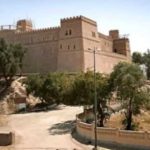
Shush Castle is located in the ruins of the ancient city of Susa (Shush) in the Khuzestan Province of Iran. It was constructed by French archaeologist Jean-Marie Jacques de Morgan in the late 1890s, as a secure base for archaeological exploration and excavation. The structure was built by local craftsmen with bricks taken from two other archaeological sites, the Achaemenid Darius/Dariush castle and the Elamite Choqazanbil ziggurat. It is built atop a hill (“tappeh”) which may contain other relics of past times. It is an example of the pre-scientific era of archaeology, when explorers mutilated or destroyed sites in the process of examining them.

The former French government property was taken over by the Islamic Republic after the Iranian Revolution in 1979. It is now used as a museum. Its best-known holding is a cuneiform tablet inscribed with the Code of Hammurabi, however this is now on display in the Louvre Museum in Paris, France.The castle was heavily damaged by Iraqi bombs during the recent Iran–Iraq War, but has since been completely restored by the Iranian government.

Toos Foundation on Telegram

A Toos Foundation channel has now become active on the Telegram network.

Golestan Palace

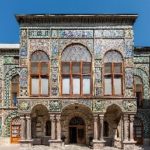
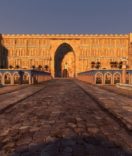
The Golestan Palace is the former royal Qajar complex in Iran’s capital city, Tehran. One of the oldest historic monuments in the city of Tehran, and of world heritage status, the Golestan Palace belongs to a group of royal buildings that were once enclosed within the mud-thatched walls of Tehran’s arg (“citadel”). It consists of gardens, royal buildings, and collections of Iranian crafts and European presents from the 18th and 19th centuries.

Tehran’s arg (“citadel”) was built during the reign of Tahmasp I (1524–1576) of the Safavid dynasty (1502–1736), and was later renovated by Karim Khan of the Zand dynasty (1750-1779). Agha Mohammad Khan of the Qajar dynasty (1742–1797) chose Tehran as his capital. The arg became the seat of the Qajars (1794–1925). The court and palace of Golestan became the official residence of the Qajar dynasty. The palace was rebuilt to its current form in 1865 by Haji Ab ol Hasan Mimar Navai.

During the Pahlavi era (1925–1979), the Golestan Palace was used for formal royal receptions, and the Pahlavi dynasty built their own palace (the Niavaran Complex) in Niavaran. The most important ceremonies held in the palace during the Pahlavi era were the coronation of Reza Shah (1925-1941) on the Marble Throne and the coronation of Mohammad Reza Pahlavi (1941-1979) in the Museum Hall. In between 1925 and 1945, a large portion of the buildings of the complex were destroyed on the orders of Reza Shah. He believed that the centuries-old Qajar palace should not hinder the growth of a modern city. In the place of the old buildings, commercial buildings with the modern style of 1950s and 1960s were erected.

Qavam House

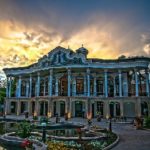
Qavam House (also widely called “Narenjestan of Ghavam”) is a traditional and historical house in Shiraz. It was built between 1879 and 1886 by Mirza Ibrahim Khan. The Qavam family were merchants originally from Qazvin. But they soon became active in the government during the Zand dynasty, followed by the Qajar, and Pahlavi dynasty as well.

The Qavam “Naranjestan” preserves the elegance and refinement enjoyed by the upper-class families during the 19th century. The paintings on the low ceilings of the house are inspired by Victorian era Europe. The mirrored porch was a focal point of the house, overlooking a small garden that was designed with fountains, date palms, and flowering plants. During the second Pahlavi era, the House became the headquarters of Pahlavi University’s Asia Institute, directed by Arthur Upham Pope and Richard Nelson Frye. Frye and his family also lived in the house for a while. The house today is a museum and is open to the public.

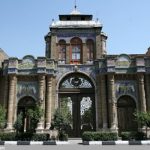
The National Garden

The National Garden (Bāgh-e Melli) is a historical and governmental compound in Tehran, Iran. Formerly referred to as the Parade Square (Meydān-e Mašq), it used to be a military shooting range during the Qajar period. It was then turned into a public park for a short period, and eventually important governmental offices and museums were built around it.  The Ministry of Foreign Affairs (formerly the “Police House”), the University of Art (formerly the “Cossack House”), Malek National Museum, Post and Communication Museum, and the National Museum are situated in the compound.

The field was first constructed during the reign of the Qajar Dynasty. It was used for the military garrison, and the Cossacks practiced military parade in it. The range was then developed during the reign of Nasser ed Din Shah, with a new building named Cossack House, which was somewhat transformed during the reign of Mozaffar ed Din Shah. Under the rule of Reza Shah of the Pahlavi Dynasty, the range was turned into a modern public park for a short period, and the famous gate of the compound was built by Mirza Mehdi Khan Shaghaghi (Momtahen od Dowle) before the arrival of World War II. Eventually, important governmental buildings were built around the compound; such as the “Police House” (or the “Shahrbani House”) which was built for Shahrbani, an organization responsible for maintaining security in the city.

The Sa’dabad Complex

The Sa’dabad Complex is a 300 hectare complex built by the Qajar and Pahlavi monarchs, located in Shemiran. Today, the official residence of the President of Iran is located adjacent to the complex. The complex includes more than 180 hectares of natural forest, streets, qanats, galleries, and museums.

The complex was first built and inhabited by Qajar monarchs in the 19th century. After an expansion of the compounds, Reza Shah of the Pahlavi Dynasty lived there in the 1920s, and his son, Mohammad Reza Pahlavi, moved there in the 1970s. After the 1979 Revolution, the complex became a museum. Currently, parts of the complex are museums, which visitors can roam through. The complex is operated by the Cultural Heritage Organization of Iran which is responsible for most of the artifacts, locations, and cultural aspects of the country.

Shapouri House

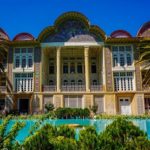
Shapouri House or Shapouri Pavilion and Garden is an early 20th-century Persian building and garden in the city of Shiraz, Iran.

It has 840 square metres of underpinning and 4635 square metres of garden area. This building is in the old central region of Shiraz, known as Anvari. This mansion was registered as a national building in 2000. Shapouri mansion was designed by Abolghasem Mohandesi and built between 1930 and 1935; the owner was Abdolsaheb Shapuori. This building is unique and very innovative.

Celebrate Nowruz in LACMA

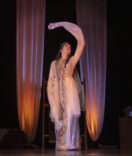
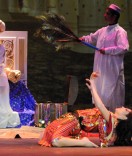
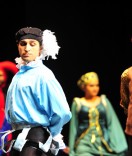
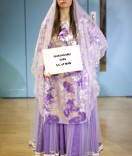
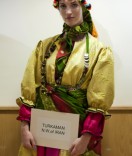
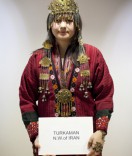
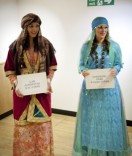
Los Angeles County Museum of Art (LACMA) will hold joint a day of celebrations with Farhang Foundation on 13th March 2016 to mark the Iranian New Year.  Included in the programme are the world premiere of Whispers of Spring, a multimedia musical performance by Mamak Khadem and her ensemble, a live concert by NIYAZ and a traditional Iranian costume parade.

“Radio Dreams” Wins Hivos Tiger Award at Rotterdam Filmfest

The winner of the Hivos Tiger Award 2016 of the Rotterdam International Film Festival is Radio Dreams by Babak Jalali. Hivos Tiger Awards Competition is about upcoming talent who get a chance to shine on the world stage.

As of 2016, eight films will compete in the Hivos Tiger Awards Competition for a single Hivos Tiger Award. The jury on the winner: “For its subtle and humorous reflection on displacement and alienation of a group of misfits in a foreign culture.”